Three application methods cover almost every panel coating job: roller, spray and curtain. The right one is decided by the shape of the workpiece, the coating viscosity and how much paint you are willing to lose to overspray.
Roller coating
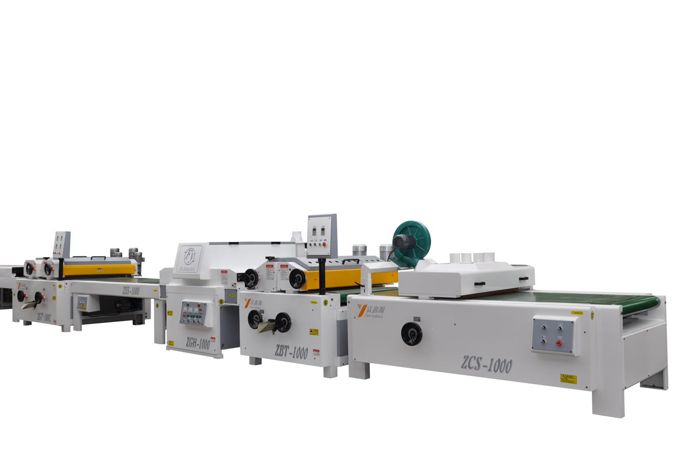
A roller coater presses coating onto the face of a flat panel between a rubber application roller and a steel doctor roller. The gap between the two rollers sets film thickness, so the coat weight is repeatable from the first panel to the last of the shift. Transfer efficiency is close to 100 percent: there is no overspray, and unused paint stays in the tray.
Roller coating suits flat, rigid substrates — MDF and plywood panels, aluminium sheet, glass, wall cladding board. It cannot reach recessed panel profiles or edges, so a routed door face needs spray for the profile even when the flat field is rollered.
- Best for flat panels, primer and putty coats, UV coatings, high-volume single-material runs.
- Not for profiled or three-dimensional workpieces, or panels needing edge coverage.
- Machines single roller coater, double roller coater, forward/reverse roller coater.
Spray coating
Spray atomises the coating and carries it onto the workpiece with air or electrostatic charge. Because nothing touches the panel, spray reaches profiles, edges, frames and assembled parts, and it handles both solvent-based and water-based paints across a wide viscosity range.
The cost is transfer efficiency. A conventional reciprocating sprayer puts a meaningful share of the paint into the booth filters; an electrostatic bell sprayer recovers much of that by charging the droplets so they wrap onto the earthed workpiece. Where paint price dominates the cost per square metre, electrostatic is the difference between a viable and an unviable line.
- Best for profiled doors, frames, assembled furniture, top coats where finish quality outranks paint cost.
- Machines reciprocating sprayer, rotary sprayer, electrostatic bell sprayer.
Curtain coating
A curtain coater flows a continuous sheet of coating from a head onto panels passing underneath on a conveyor. Film build is high and even, which makes it the traditional choice for thick, low-viscosity clear coats on flat panels. It shares roller coating’s limitation — flat work only — and needs a larger paint circulation volume to keep the curtain stable.
Deciding in practice
Most lines we build use more than one method. A typical wooden door line rollers UV putty and primer onto the flat field, sands, then sprays the top coat so the profile and edges are covered. An aluminium panel line rollers primer and top coat and never sprays at all.
Work through it in this order:
- Geometry first. If any face is not flat, spray has to be in the line somewhere.
- Then coat weight. Thick, even clear coats favour curtain or double roller; thin, controlled primer favours roller.
- Then paint economics. At high volume, transfer efficiency decides the payback period more than machine price does.
- Then curing. UV coatings need UV curing; solvent and water-based coatings need IR levelling and hot air drying length, which sets the footprint of the line.
Send us your panel size, material, target film build and output per shift and we will lay out the sequence and quote the machines that fit it.