The requirement
Consistent colour and film thickness on workpieces that are not flat, in small batches with frequent colour changes — the case where hand spraying is normally accepted and normally inconsistent.
Line sequence
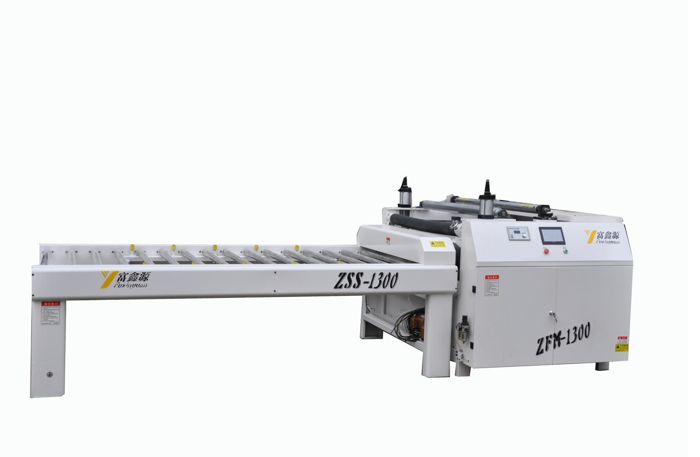
- 1. Loading. Workpieces are placed on the infeed conveyor; the booth reads position and starts the spray program.
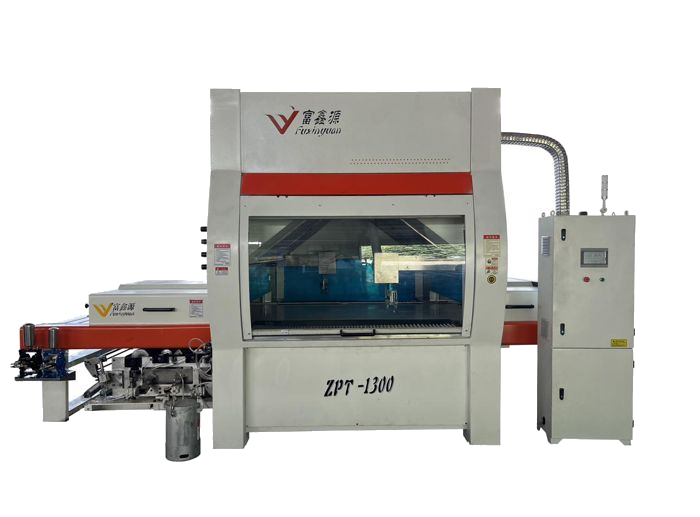
- 2. Reciprocating spray. A reciprocating sprayer (F2PT-1300) traverses the workpiece with four guns, each with independent pressure adjustment, inside an enclosed and extracted booth.
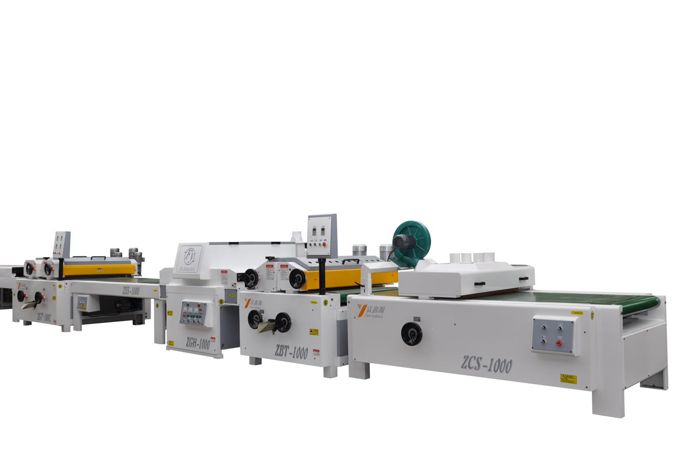
- 3. Levelling. An IR levelling tunnel flows out the spray pattern before anything sets.
- 4. Drying. A hot air drying tunnel removes solvent or water; length is set by the coating and the line speed.
- 5. Unloading. Panels leave on a flat belt conveyor, which supports small and thin parts that would sag between rollers.
Why this configuration
Enclosing the spray stage does three things at once: it keeps overspray out of the hall, it lets the extraction system carry solvent vapour away from the operator, and it stabilises the air movement around the workpiece, which is what makes film thickness repeatable batch to batch.
PLC control holds the program per product, so a colour or product change is a recipe selection rather than a retrained operator. That is the difference that matters in small-batch work.
Adapting it
Where paint cost dominates — high volume, expensive coatings — an electrostatic bell sprayer replaces the reciprocating guns and recovers a large share of what would otherwise go into the filters. For round or continuously fed profiles, a rotary sprayer is the better fit. All three run in the same booth footprint.