The requirement
A finish that roller coating alone cannot reach: mirror high-gloss and soft skin-feel surfaces, applied to already-coated flat panels, without the paint film thickness and curing time a comparable liquid system would need.
Line sequence
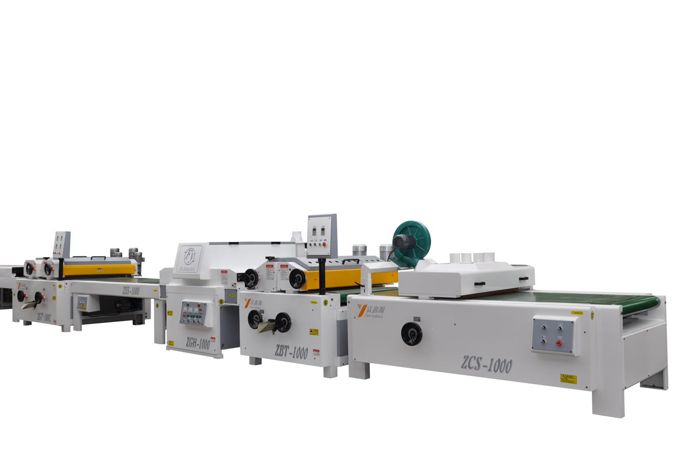
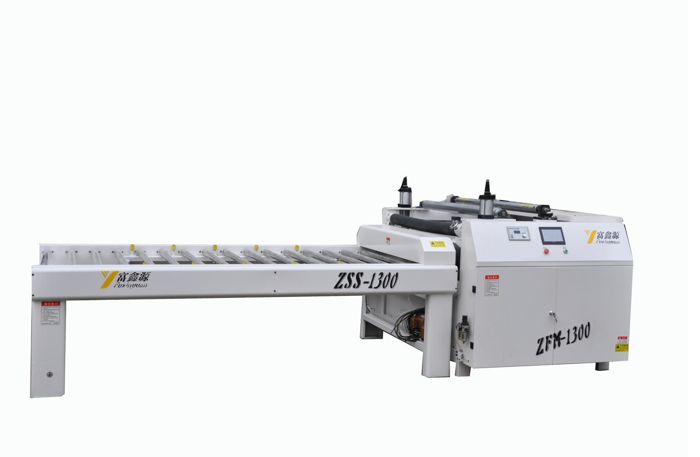
- 1. Panel feed. Coated, cured panels enter on a roller conveyor at a set pitch.
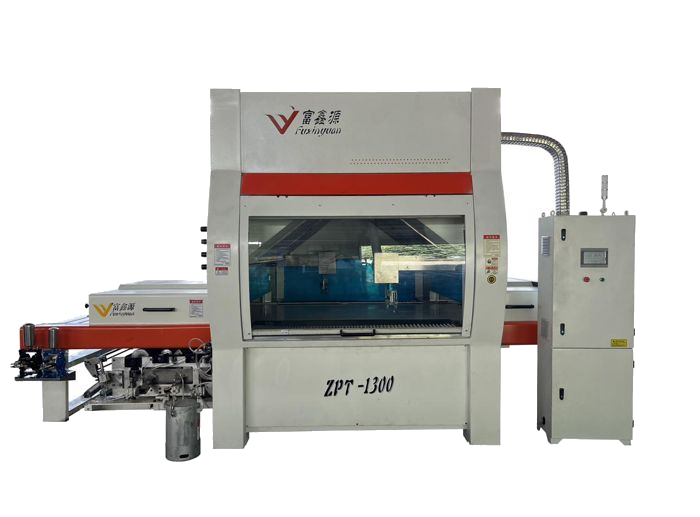
- 2. Film feed and tension control. The automatic precision film laminating machine unwinds film under controlled tension — the variable that decides whether the finished panel is flat or bowed.
- 3. Cold-press bonding. Adhesive-coated film is pressed onto the panel face at 0.6 MPa, working across the full 1300 mm width.
- 4. UV curing. The bond line is cured in-line so the panel is stable immediately.
- 5. Automatic film cutting. Film is trimmed at the panel edge without an operator on the knife.
- 6. Discharge. A flat belt conveyor supports the laminated face on the way out to stacking.
Why this configuration
Lamination and coating solve different problems, and this line is built to sit downstream of a coating line rather than replace it. The panel arrives already primed and cured; the laminator only has to handle film, adhesive and pressure. That keeps the machine short — 2.5 m of floor length — and the whole station runs on 11 kW.
Cold-press bonding rather than hot roll means no heat is put into the substrate, so thin MDF and pre-finished panels come out flat.
Adapting it
Working width is built to order; 1300 mm is the standard unit. Where panels are handled between stations without an operator, an automatic rotary board gripper connects this station to the coating line in a ring or L-shaped layout under one PLC.